
Article
How Property Types, Zoning and Titles Derail (or De‑risk) Your Finance
Not every property is bank-ready. This guide shows how zoning, titles and “quirky” property types can affect valuations, LVRs and approval – and what to check before you sign.
Key Takeaway
This article explains how Australian property types, zoning and titles affect home and investment lending, including why mixed‑use, very small units, company title and rural or heritage‑listed properties can attract lower loan‑to‑value ratios and tougher valuations. It outlines key lender risk triggers such as floor area under 40 m² and non‑standard zoning, and provides a practical checklist buyers can run before signing a contract. Readers gain clear actions to reduce valuation risk, structure deposits and choose finance that actually fits the property.
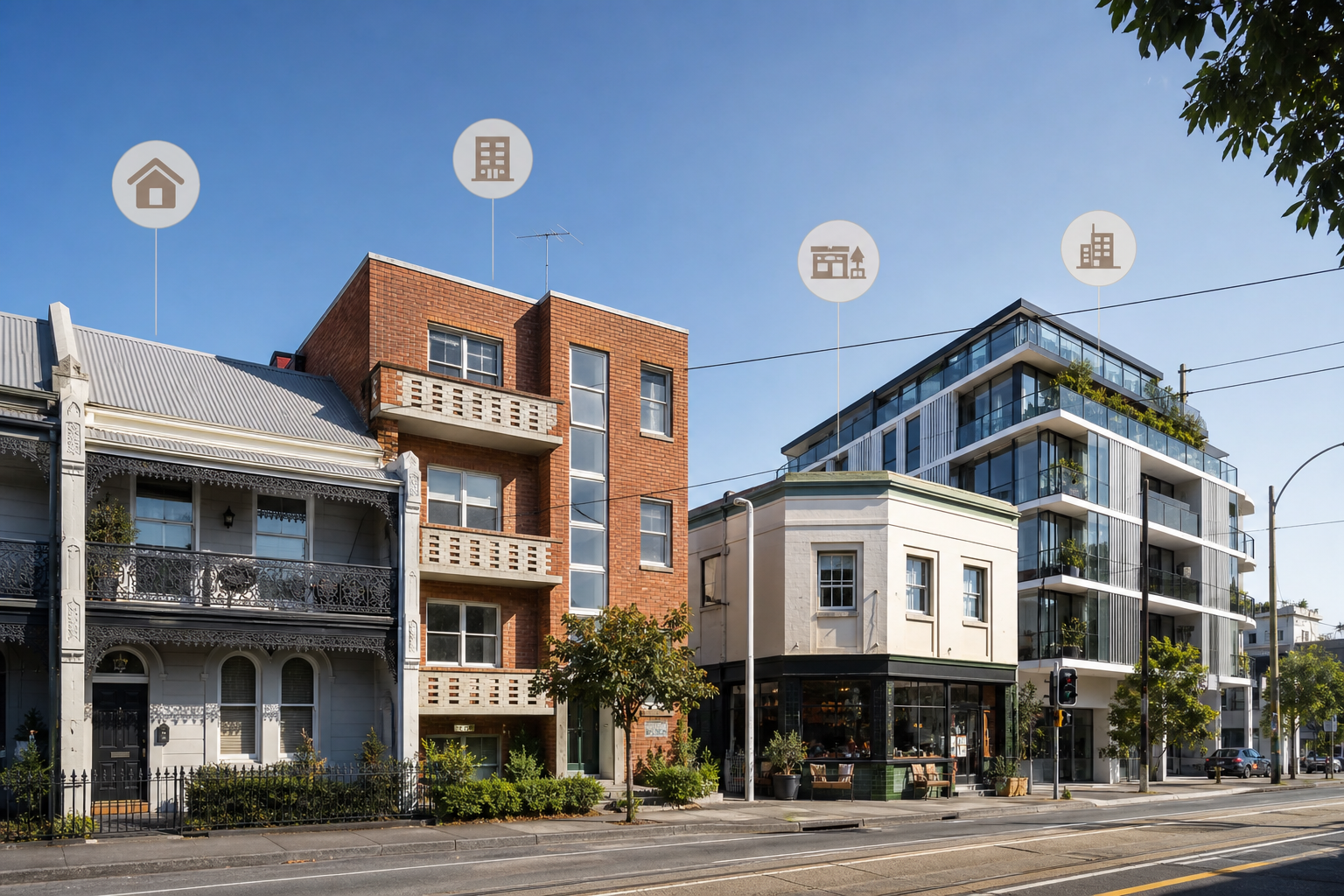
Not every property is “bank friendly”. Property type, zoning and title can make the difference between a smooth approval at 90–95% LVR and a last‑minute “computer says no” or a low valuation that blows your deposit.
In lending, property zoning and title affect three things:
- How willing a lender is to accept the property as security.
- The maximum LVR they’ll offer (and whether LMI is available).
- How conservative the valuer will be on price and rental income.
This guide breaks down the local property quirks that trip people up – and what you can check this week to protect your finance.

Different property types drive different LVRs, valuation behaviour and lender appetite.
1. Why property type and zoning matter more than most people think
Most borrowers focus on income, expenses and interest rates. Lenders do too – but the security property is equally important. If it’s hard to sell, hard to value or hard to re‑purpose, banks treat it as higher risk.
That risk shows up as:
- Lower maximum LVRs (say 60–80% instead of 90–95%).
- Stricter serviceability tests (especially on mixed‑use or commercial).
- Valuation shortfalls compared with the purchase price.
- Fewer lenders on the panel, which can mean less competition on rate.
As we explained in /insights/what-local-knowledge-looks-like-mortgage-broking, local knowledge is often the difference between a deal that works and one that quietly dies in credit.
1.1 The finance lens on property
When a lender looks at a property, they ask:
- Can we sell it quickly if the borrower defaults?
- Is there a deep, liquid buyer market? Or only niche demand?
- Are there any legal or physical restrictions (titles, easements, heritage overlays, zoning) that make resale complicated?
Any “yes but…” answer usually means:
- Lower LVR (more deposit/equity needed).
- Higher pricing (because it may end up in a specialist or commercial bucket).
- Extra conditions (lease terms, valuations, environmental reports).
2. Zoning: residential, mixed‑use, commercial and rural
2.1 Core residential zoning – usually the easiest to finance
Standard residential zoning (e.g. R2/R3 in NSW, Neighbourhood Residential/General Residential in VIC) is generally easiest for lenders, provided:
- The dwelling is conventional (house, townhouse, standard apartment).
- There are no major defects and it’s habitable.
- Title and planning are straightforward.
For these, LVRs up to 95% (with LMI) can be available for strong applicants, though the APRA‑mandated 3% serviceability buffer still applies.
2.2 Mixed‑use property finance in Australia
Properties with residential plus commercial use – for example:
- Shops with an apartment above.
- Live‑work lofts.
- Buildings zoned B1/B2 (NSW) or Commercial 1 (VIC) but used partly as residence.
Typical finance impacts:
- Often assessed as commercial or specialised residential.
- LVR commonly capped around 60–80%.
- Shorter loan terms (15–25 years, not always 30).
- Tougher serviceability and sometimes higher rates.
For small business owners, these can be powerful – your premises plus accommodation in one – but they need early lender selection and structure work. We unpack some of these structuring choices in more detail in /insights/structuring-premium-property-purchases-companies-trusts-smsfs.
2.3 Commercial‑zoned properties used as homes
Occasionally you’ll see a cool warehouse or office converted to a residence, but the zoning remains commercial.
Red flags for lenders:
- Harder to sell purely as a home.
- May not comply with residential building standards.
- Future planning use may change.
Result: often funded under commercial lending policy, not a standard home loan. Deposits of 30–40% are common, and LMI may not be available.
2.4 Rural residential mortgage rules
“Rural” is a spectrum. Lenders distinguish between:
- Rural residential / lifestyle – typically 2–50 acres, dwelling plus hobby paddocks.
- Primary production / farms – income‑producing agriculture.
Impacts:
- Many mainstream lenders are comfortable up to a certain land size (say 2–10 hectares) where the primary use is residential.
- Once the land is larger or clearly income‑producing, it may move to agribusiness/commercial policy.
- Valuers may exclude parts of the land from “mortgage security value” if they think they’re not easily saleable.
Practical tip: If you’re eyeing a lifestyle acreage, ask upfront how the lender defines rural residential and where their cut‑off points are.
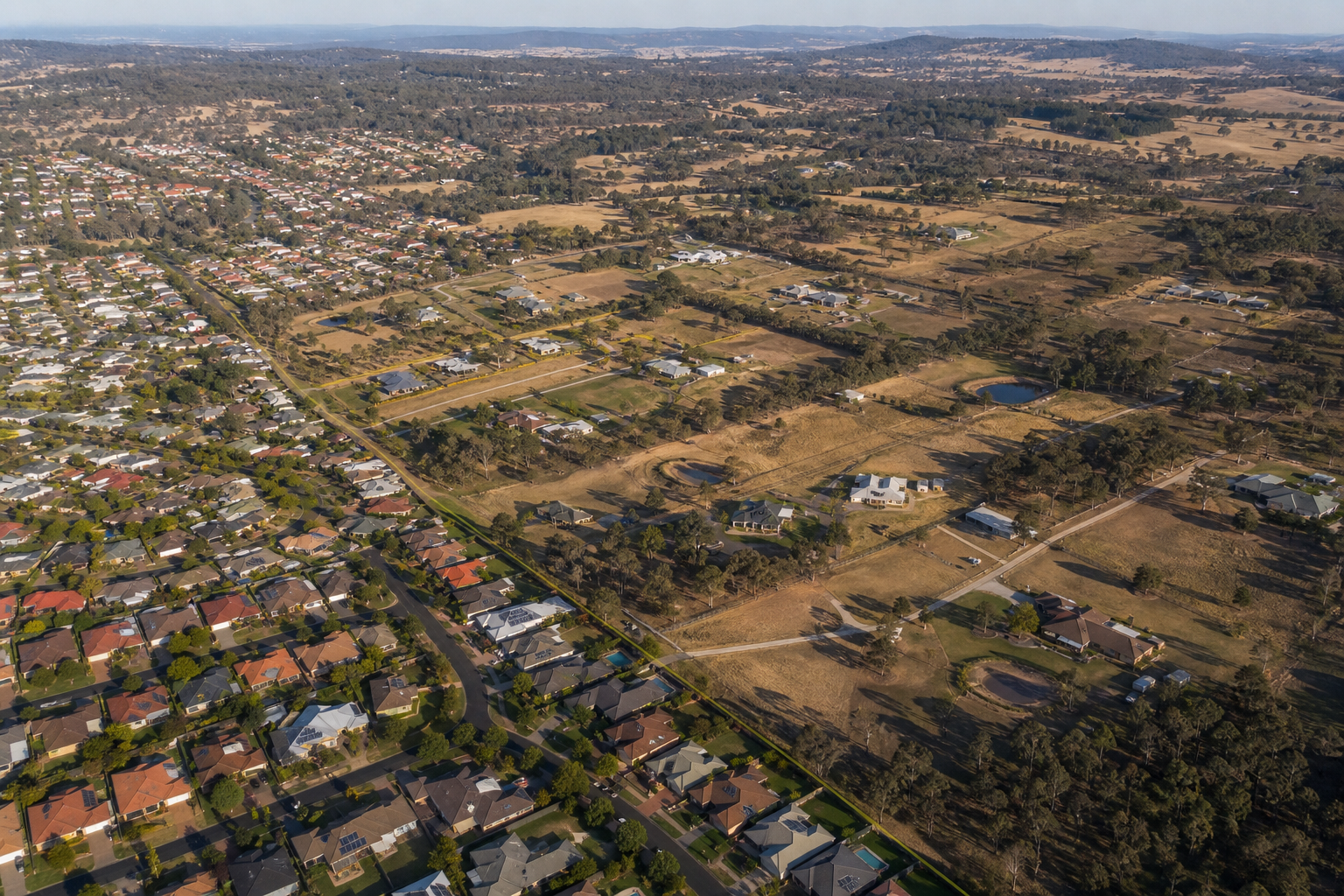
Zoning lines between residential and rural residential can push a loan into very different policy buckets.
3. Strata, company title and other ownership structures
3.1 Strata title – the gold standard for apartments
Strata title is what most buyers expect with units and townhouses:
- You own your lot.
- You share common property via the owners corporation/body corporate.
Lenders like it because it’s standardised and legally clear. But even with strata, there are trip‑ups:
- Very small units (sub‑40 m² internal) can be restricted.
- High‑density towers in some suburbs are on lender “watchlists” – we explore this for Mascot in /insights/mascot-property-types-local-lending-rules.
- Poor strata records (big defects, weak sinking fund) can spook valuers.
3.2 Strata vs company title lending
Company title is more common in older buildings in Sydney’s east and some Melbourne pockets. You buy shares in a company that entitle you to occupy a specific unit, rather than owning the real estate itself.
Key differences vs strata from a lending perspective:
- Harder to sell, especially to first‑home buyers using grants.
- Company constitution may restrict tenants or renovations.
- The company usually has a single large loan or multiple loans, which adds risk.
Finance impacts:
- Fewer lenders; many will either decline or treat it as a higher‑risk security.
- LVR caps often 60–80% instead of 90–95%.
- Tighter valuation – valuers often adjust down versus similar strata units.
If you’re buying in an area with older stock (for example, some Art Deco blocks in Rose Bay, as we covered in /insights/rose-bay-property-types-lending-rules), never assume the title type – confirm it from the contract.
3.3 Community title, stratum and other hybrids
You’ll also see:
- Community title estates with shared roads, facilities and levies.
- Stratum title in some mixed‑use buildings where ownership is split between commercial and residential components.
These are often fine, but lenders will read the scheme documents carefully. Complex rights or shared obligations can:
- Limit the buyer pool.
- Create disputes around maintenance or future development.
Again, the effect is usually lower LVRs and more conservative valuations.
4. Heritage overlays and other planning constraints
4.1 How heritage and overlays affect value – and lending
A heritage overlay or listing protects the character of a building or area. Great for streetscape, but it can limit what you can alter.
For lenders and valuers, the questions are:
- Does the overlay restrict extensions or redevelopment potential?
- Are maintenance costs likely to be higher?
- Is there a narrower buyer pool?
Most heritage properties are still financeable under normal residential policy, but you may see:
- More cautious valuations – particularly for investors banking on development upside.
- Valuers discounting hypothetical redevelopment value because overlays constrain future use.
4.2 Worked example: heritage overlay valuation risk
Say you buy a freestanding house in an inner‑city heritage area for $2.0m expecting to borrow at 80% LVR.
- Target loan: $1.6m.
- Valuer considers sales of similar homes without overlays and applies a 5% discount for restricted future changes.
- They value it at $1.9m, not $2.0m.
At 80% LVR, maximum lendable amount is:
- 80% × $1.9m = $1.52m.
- Funding gap vs your plan: $80,000.
You either tip in more cash, renegotiate price, or scramble to a more flexible lender.
4.3 Bushfire, flood and environmental constraints
Bushfire‑prone land (BAL ratings), flood zones and environmental overlays can also:
- Reduce the number of lenders willing to fund the property.
- Trigger stricter building insurance requirements.
- Lead valuers to apply a risk discount.
Practical step this week: order the contract, planning certificate and insurance quote early, before cooling‑off expires.
Heritage and planning overlays don’t stop lending, but they can cap value and future options.
5. The “quirky property” list: when lenders get nervous
Some property attributes reliably cause lender hesitation, even in prime suburbs.
5.1 Tiny apartments and studios
Many lenders set minimum internal size thresholds, often:
- 40 m² internal (excluding balconies and car spaces) for standard policy.
- Some will go down to 30–35 m² with tighter LVRs.
Risks in the bank’s eyes:
- Smaller buyer pool (often investors or singles only).
- Vulnerable to oversupply in high‑rise precincts.
Expect:
- LVR caps of 70–80%.
- No or limited LMI.
- Conservative rent assumptions for investors.
5.2 Serviced apartments, student accommodation and hotel stock
Anything tied to management agreements, restrictions on use or hotel‑style operations is higher risk.
Impacts:
- Often treated as specialised/semi‑commercial.
- LVRs commonly capped at 60–70%.
- Few mainstream lenders; more specialist, higher‑rate funders.
5.3 Dual‑key / room‑by‑room configurations
These can look attractive for yield but raise questions about:
- Planning compliance.
- Fire and safety standards.
- Whether it’s effectively a boarding house.
Many lenders limit or decline these; others will shade rent heavily in servicing or insist on evidence of compliant approvals.
5.4 Mixed‑use and main‑road locations
We touched on zoning, but even a standard home on a major arterial road can be treated more harshly:
- Noise, air quality and safety concerns.
- Narrower buyer pool (families often prefer quieter streets).
Valuers often apply a discount vs similar homes in nearby side streets, which flows into your borrowing capacity.
6. How property quirks show up in loan terms: comparison table
| Property / Title Type | Typical LVR Range* | Usual Loan Type | Common Extra Risks / Conditions |
|---|---|---|---|
| Standard house/townhouse (residential zoning) | 80–95% (with LMI) | Standard home loan | Building/pest, insurance, serviceability buffer |
| Standard strata apartment (>40 m²) | 80–95% (with LMI) | Standard home loan | Strata report, building quality, high‑rise limits |
| Small unit/studio (<40 m²) | 60–80% | Home / specialist resi | Minimum size rules, LMI limits, tighter valuations |
| Company title apartment | 60–80% | Home / specialist resi | Company constitution, restricted lenders |
| Mixed‑use shop + residence | 60–80% | Commercial / mixed‑use | Lease review, zoning, shorter terms |
| Rural residential (lifestyle) | 70–90% | Home / rural resi | Land size caps, access, water, primary use tests |
| Income‑producing farm | 60–70% | Commercial/agribusiness | Farm income, commodity risk, specialist valuation |
| Heritage‑listed dwelling | 70–90% | Home loan | Overlay review, higher maintenance, development limits |
| Serviced apartment / hotel stock | 60–70% | Commercial/specialist | Management agreement, limited buyer pool |
*Indicative only – real policy varies by lender and over time.
7. Tax, structure and the 2026 negative gearing reforms – why property type matters more now
The 2026–27 Federal Budget reforms fundamentally change how residential investment property is taxed:
- From 12 May 2026, investors who buy established residential housing can’t deduct net rental losses against salary or other non‑rental income; losses are quarantined to other residential income or capital gains.
- From 1 July 2027, negative gearing is effectively limited to new builds, with existing properties held before 7:30pm on 12 May 2026 grandfathered under the old rules.
Property type intersects with this because:
- New builds vs established are taxed differently (see facts 1–8, 16 in the knowledge list).
- Mixed‑purpose or mixed‑use properties make loan splitting and interest apportionment much more important, especially when losses are quarantined.
As we discussed in /insights/business-owners-home-personal-vs-trust-vs-company, putting your home or investment into a company or trust can add extra tax layers and make borrowing harder. Overlay the new gearing rules and getting the property type, lender and structure aligned upfront is now critical, not optional.
8. A one‑week action plan: checks to run before you commit
8.1 If you’re actively house‑hunting this week
For any property you’re seriously considering, have your broker or solicitor confirm:
- Exact zoning and council.
- Title type (strata, company, Torrens, community, etc.).
- Approximate internal area for units (excluding balconies).
- Any heritage overlays, flood or bushfire designations.
- Whether there are management agreements (serviced apartments, student stock).
Ask your broker:
- Which lenders are comfortable with this exact combination.
- What LVR caps you should plan for.
- Whether the property type is on any internal “shading” or postcode risk lists.
8.2 If you already own a quirky property
This week you can:
- Order a current valuation or agent appraisal to sanity‑check your equity.
- Have your loan structure reviewed – especially if you have mixed‑purpose or cross‑collateralised loans.
- Check your insurance, strata minutes and maintenance plans – issues here often bleed into valuation risk.
Our case studies in /insights/boutique-broking-case-studies-eastern-suburbs show how cleaning up these details before refinancing can materially lift your usable equity or borrowing power.
8.3 Worked example: planning around a lower LVR
You’re buying a $900,000 mixed‑use shop with residence above.
- Best lender LVR on offer: 70%.
- Maximum loan: 0.70 × $900,000 = $630,000.
- Upfront costs (stamp duty, legals, etc.): say $45,000.
You’ll need:
- Deposit/equity: $900,000 − $630,000 = $270,000.
- Total cash/equity requirement including costs: $315,000.
Without this planning, you might have budgeted for a 90% LVR like a standard home and ended up $180,000 short on settlement.
9. Choosing the right broker style for complex property types
Quirky properties, mixed‑use sites and non‑standard titles are exactly where broker style matters.
- An online, form‑driven broker might quote sharp rates assuming standard residential policy.
- A phone‑based broker may get part of the way, but miss local zoning or building‑specific issues.
- A genuinely local, technical broker will pressure‑test valuations, titles and zoning before you pay for a full application.
If your target property is anything but plain vanilla, use the checklists in /insights/online-phone-vs-local-mortgage-brokers-australia to choose someone who actually understands local planning and lender policy – not just comparison‑site rates.
FAQs
1. Can I still get 90–95% LVR on a company title unit?
It’s unlikely. Most mainstream lenders either don’t accept company title at all or treat it as higher risk. That usually means lower maximum LVRs (often 60–80%), stricter conditions and a smaller lender pool. If you have a strong overall profile and extra security or cash, there may be ways to structure around this, but you should plan on needing a bigger deposit.
2. Are rural lifestyle properties always harder to finance?
Not always, but they need more care. Many lenders are comfortable with small to mid‑sized acreages used primarily as homes, but land size limits and location matter a lot. Once a property looks more like a farm or is in a very remote area, the deal can shift into commercial or agribusiness territory with lower LVRs and extra conditions.
3. Do heritage overlays stop me from borrowing to renovate?
No, but they do shape what you can do and how valuers view the finished property. Lenders will usually rely on council approvals and the builder’s plans; if heritage rules limit extensions or major alterations, that can cap the property’s future value. It’s smart to get planning advice and a broker‑backed valuation estimate before committing to big renovation loans.
4. Why do banks dislike serviced apartments and student housing?
Because resale and rental markets are narrow and heavily management‑dependent. If there’s an oversupply of similar stock or the operator runs into trouble, values can fall sharply and vacancies rise. Lenders respond by capping LVRs, tightening valuations and sometimes only funding these properties under commercial or specialist policies.
5. How do I know if a unit is too small for normal lending?
You need the internal area from the contract or strata plan, and it must usually exclude balconies and car spaces. Many lenders draw the line at 40 m² internal for standard policy; some are stricter, some more flexible. If the internal area is in the 30–40 m² band, get a broker to check lender‑by‑lender rules before you pay a non‑refundable deposit.
6. Can zoning or title affect my ability to claim tax deductions?
Indirectly, yes. Zoning and title influence whether a property is treated as residential, commercial or mixed‑use, which in turn affects interest deductibility and how negative gearing rules apply after the 2026 reforms. Structures like companies and trusts also interact with these rules, so you should coordinate tax and lending advice before buying non‑standard stock.
Key takeaways
- Property type, zoning and title can quietly cap your LVR, shrink your lender options and trigger conservative valuations – even when your income and credit are strong.
- Mixed‑use, company title, very small units, serviced apartments, rural and heritage‑affected properties all need early, tailored lender selection and more deposit.
- Planning constraints (heritage, flood, bushfire, environmental overlays) don’t stop lending, but they can reduce value and buyer demand, which flows into your borrowing power.
- The 2026 negative gearing reforms make it even more important to match property type, ownership structure and loan splits, especially for investors and business owners.
- A broker who truly understands local property quirks can often avoid valuation surprises, structure around lower LVRs and keep more lender options on the table.
If you’re considering a property that’s anything other than a straightforward suburban house or standard apartment, this is exactly the time to get joined‑up tax, lending and property advice. At Local Knowledge Finance, you get your tax, your loan, and your property strategy in one conversation with a CPA, Tax Agent and Broker. Book a free 15‑minute strategy call and download our planning checklists at https://localknowledge.finance so your next purchase is bank‑ready before you sign.
General advice only.
Frequently asked questions
Talk to a CPA-certified broker
Free consultation, plain-English advice tailored to your situation.
