
Article
SMSF Property Loans for Small Business Owners: A Plain-English Guide
A clear, decision-grade guide to how SMSF property loans work for Australian small business owners, especially when buying their own business premises.
Key Takeaway
SMSF property loans let an Australian self‑managed super fund borrow, via a limited recourse borrowing arrangement (LRBA), to buy a single property, often capped around 65–75% LVR for commercial assets. For small business owners, this is most effective when the SMSF owns their business premises and leases it to the trading entity on arm’s‑length terms. Understanding structure, cashflow, tax and lender criteria helps decide if the strategy fits their super balance, business stability and retirement plan.

Self‑managed super fund (SMSF) property loans let your super borrow to buy a single property using a limited recourse borrowing arrangement (LRBA). For small business owners, this often means your SMSF owns your business premises and your trading entity pays rent to your fund. The loan is limited recourse, so if things go wrong the lender’s rights are mainly against the property, not the rest of the SMSF.
Done well, this can turn rent you’d otherwise pay a landlord into wealth inside your super, at concessional tax rates. Done badly, it can over‑gear your retirement savings and strain both business and SMSF cashflow. This guide walks through how SMSF property loans work in Australia, what banks look for, and how to work out if this fits your situation.
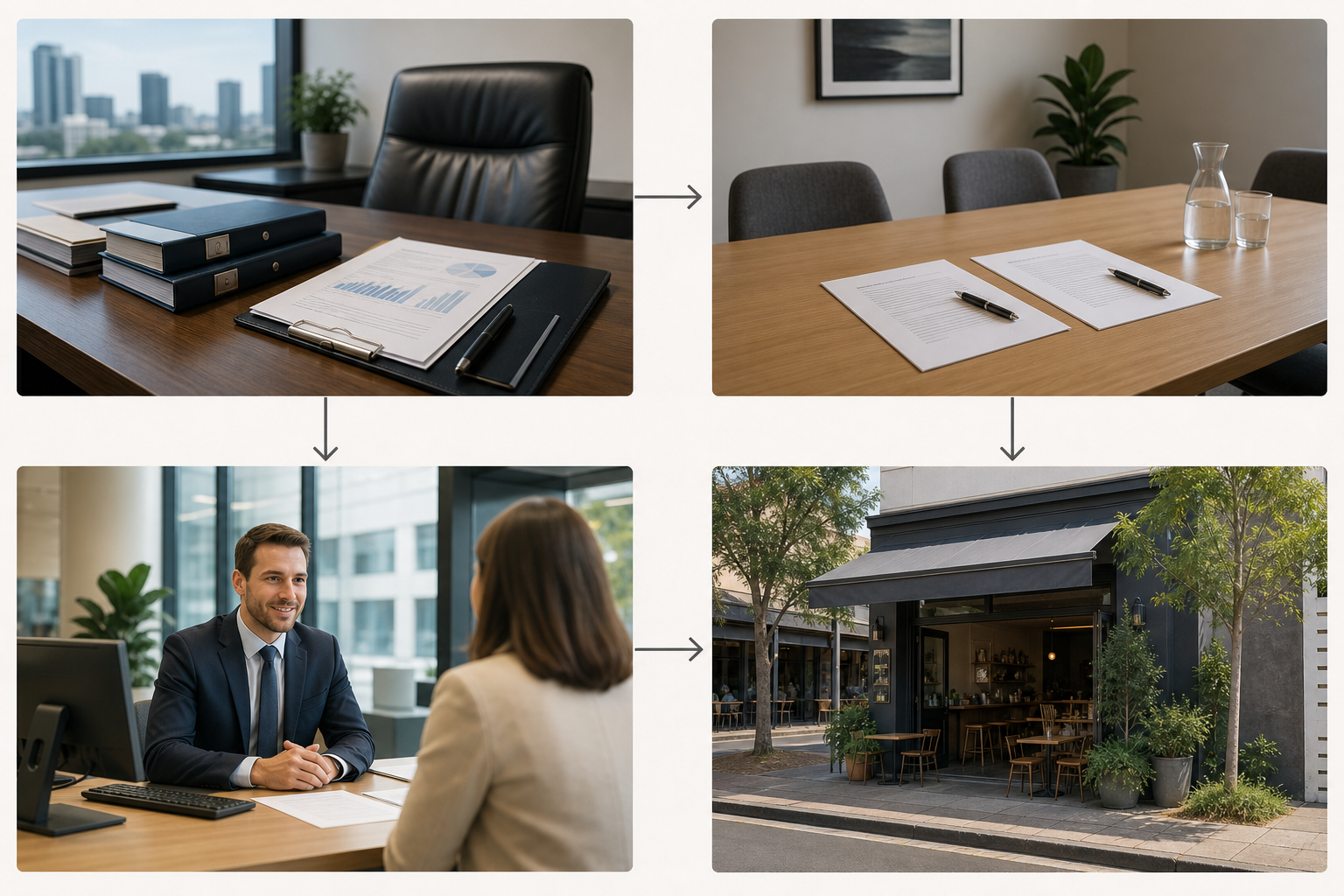
An SMSF property loan uses a limited recourse structure with a separate holding trust.
1. What an SMSF property loan actually is
An SMSF property loan is a loan to your SMSF to buy a single acquirable asset (usually one property) under an LRBA as set out in the Superannuation Industry (Supervision) Act.
Key features:
- Limited recourse – if the SMSF defaults, the lender can seize the property and its income, but not the fund’s other assets (subject to any personal guarantees).
- Holding/bare trust – a separate trustee legally holds the property on trust for the SMSF until the loan is repaid.
- One asset per LRBA – generally one title per LRBA. Multiple titles usually mean multiple LRBAs.
- Strict use rules – the property must satisfy super law (e.g. business real property if leased to a related party) and the sole purpose test.
Compared with a normal home or commercial loan, SMSF lending is more conservative. Lenders typically offer lower maximum LVRs and higher rates than standard owner‑occupied loans, and are strict about documentation and compliance.
If you’re weighing this against buying in your own name or via a company or trust, it’s worth reading how the structures compare in Should Your SMSF Own Your Business Premises or Not? and Orchestrating Personal, Company and SMSF Loans for Big Purchases.
2. When SMSF property loans make sense for small business owners
For a small business owner, using an SMSF loan is less about “cheap debt” and more about strategy:
2.1 Strong strategic fits
SMSF property loans can be powerful if:
- You have a profitable, stable business and plan to stay in similar premises for 7–10+ years.
- Your SMSF has a meaningful balance (often $300k+ before the purchase is even considered, and commonly more for commercial premises).
- You want to own your business premises but keep it separate from the trading risks of your company or sole trader structure.
- You’re on a high marginal tax rate, so shifting rent into super at 15% (or less in pension phase) is attractive.
- You value asset protection – if your business fails, the premises in the SMSF are usually better insulated than if held in your personal name.
This is one reason commercial premises in an SMSF often stack up better than residential property for business owners, which mostly provides only indirect investment benefits rather than supporting the trading business itself. That contrast is unpacked in Should Business Owners Buy Residential Property Inside Their SMSF?.
2.2 Situations where it’s usually too risky
An SMSF property loan is often a poor fit if:
- Your business is early‑stage, volatile or still proving itself.
- Your combined super balances are relatively small, so a single property would dominate your retirement savings.
- You expect to move premises in the next few years.
- You’re carrying heavy personal or business debts already and cashflow is tight.
- You’re not willing to engage specialist tax, legal and SMSF advice – these structures are not DIY.
In these cases, leasing premises and focusing on business growth and personal borrowing capacity (see How Banks Really Judge Your Small Business At Home Loan Time) may give you more flexibility.
3. How the SMSF property loan structure works
Let’s break down the moving parts in an LRBA for a small business owner.
3.1 The basic structure
Typically you’ll have:
- Your SMSF – the borrower, which receives rent and contributions and pays expenses.
- A holding (bare) trust – the legal owner of the property until the loan is repaid.
- The lender – often a bank or specialist SMSF lender.
- Your trading entity (company, trust or sole trader) – the tenant paying rent to the SMSF.
Cashflow usually looks like this:
- Your business pays commercial rent to the SMSF.
- You and/or your employer make super contributions into the SMSF (SG, salary sacrifice, personal deductible contributions, etc.).
- The SMSF uses rent + contributions to pay loan interest and principal, property expenses and other fund costs.
All lease terms must be arm’s length and documented – market rent, normal outgoings, standard review clauses and enforceable payment terms.
3.2 Worked example: buying your own warehouse
Assume:
- Purchase price: $1,200,000 (commercial warehouse)
- SMSF deposit + costs: $420,000 (35% deposit + stamp duty/fees)
- Loan: $780,000 (65% LVR)
- Indicative interest rate: 7.0% p.a. (SMSF commercial, interest + principal)
- Loan term: 20 years
Approximate annual repayment (principal & interest over 20 years at 7.0%): about $72,600 (~$6,050 per month).
Cash in:
- Market rent from your business: say $80,000 p.a. (plus GST if applicable)
- Employer + personal contributions into SMSF: $40,000 p.a. (split across members within contribution caps)
Cash out:
- Loan repayments: $72,600 p.a.
- Property expenses (rates, insurance, maintenance, SMSF admin): assume $20,000 p.a.
Result:
- Total inflows: $120,000
- Total outflows: $92,600
- Surplus: $27,400 p.a. inside the SMSF (before tax), helping build buffers and cover vacancies or rate rises.
The key is ensuring rent + contributions can comfortably cover repayments and expenses even if rates rise or rent dips.
3.3 What happens if the business moves out or fails?
You must be comfortable that:
- The property is rentable to third parties at a similar market rent; and
- The SMSF can survive a period of vacancy or lower rent.
If your business fails and can’t pay rent, the SMSF still has to meet the loan. That’s why lenders will stress‑test serviceability, and why trustees should maintain cash buffers in the fund, not run it on fumes.

Stress‑testing SMSF cashflow is crucial before taking on a property loan.
4. Bank criteria: LVR, serviceability and documentation
Each lender has its own policy, but there are consistent themes in how banks assess SMSF property loans.
4.1 Typical SMSF LVR requirements
Indicative maximum LVR ranges (these are examples, not current offers):
| Loan type | Typical max LVR* | Loan term (common) | Notes |
|---|---|---|---|
| SMSF commercial property (business use) | 60–70% | 15–25 years | Strong covenants, established business and SMSF usually required |
| SMSF residential investment property | 70–80% | 25–30 years | Tighter post‑Royal Commission; higher rates than standard investor loans |
| Standard commercial loan (company) | 65–75%+ | 15–25 years | Broader range; may allow higher gearing with additional security |
| Standard home loan (individual) | Up to 80–95% | Up to 30 years | Subject to LMI and APRA 3% buffer on assessment |
*Indicative only; actual policies vary by lender and change over time.
Lower LVRs mean your SMSF needs a larger deposit and must also cover stamp duty and setup costs, which can easily add 5–7% to the purchase price.
4.2 How serviceability is tested
Lenders will generally look at:
- Net rental income (after allowing for vacancies and outgoings).
- Member contributions – historical pattern and likely continuation.
- Existing SMSF expenses – admin, other investments, insurance.
- A buffered interest rate (assessing repayments at a higher rate than today, similar in spirit to APRA’s 3% buffer on personal home loans).
They often want to see that rental income alone can cover a large chunk of repayments, with contributions topping up the balance. Heavy reliance on future voluntary contributions can make a deal harder to approve.
Remember: lenders will also look through to your personal finances, including home loans, business debts and credit conduct. Coordinating borrowing across personal, company and SMSF entities as one ecosystem usually leads to better outcomes than pushing each one to the limit in isolation – exactly the approach covered in Orchestrating Personal, Company and SMSF Loans for Big Purchases.
4.3 Documentation and eligibility basics
Expect to provide:
- SMSF trust deed and compliance status.
- Evidence the fund is allowed to borrow and hold property.
- Bare trust deed and company constitutions.
- Recent SMSF financials and tax returns.
- Business financials and tax returns (usually 2 years) for your trading entity.
- Lease agreement and independent market rent assessment.
- Personal tax returns and asset/liability statements for members/guarantors.
This is where having a broker who also understands tax and business financials can be valuable – lenders will scrutinise profit, cashflow, add‑backs and existing guarantees similar to how they do for home loans, as explained in How Banks Read Your Business Financials Before a Home Loan.
5. Using an SMSF loan to buy your business premises
For many owners, the big question is: should my SMSF own my premises or not?
5.1 Business real property and related‑party leases
If your SMSF buys premises that your business uses, the property must qualify as business real property – basically land and buildings used wholly and exclusively in one or more businesses (with some limited exceptions).
Key rules:
- The lease to your business must be arm’s length – commercial rent, normal terms, and documented.
- Rent must be paid on time like any other tenant would.
- The SMSF cannot provide non‑commercial concessions – no mates’ rates, no rent holidays without proper commercial justification.
This is non‑negotiable. The ATO expects clear evidence (valuations, agent letters, lease documents) that everything is at market terms.
5.2 Tax and cashflow dynamics
When your SMSF owns your premises:
- Your business gets a tax deduction for rent (subject to normal rules).
- The SMSF pays tax on rental income at 15% in accumulation phase, or potentially 0% on the portion supporting a retirement‑phase pension (within transfer balance caps).
- Over time, you effectively shift part of your business profits into a concessionally taxed, protected environment.
But the SMSF must treat the loan like any other investment:
- It must stay diversified enough for the members’ circumstances.
- It must maintain liquidity to pay pensions, insurance and expenses.
- Trustees have fiduciary duties toward all members, not just the one who runs the business.
Should Your SMSF Own Your Business Premises or Not? walks through a detailed decision checklist that many business owners can complete in a week.
5.3 Comparing alternatives: SMSF vs company vs personal
Very roughly:
- SMSF purchase – best for long‑term hold, stable business, strong super balances and when tax efficiency/asset protection are priorities.
- Company/trust purchase – may allow higher gearing and more flexible development, but income is taxed outside super and the asset may be more exposed to business risk.
- Personal purchase – often best if you also want to use the property for personal reasons (e.g. mixed‑use) or keep super simple, but can concentrate risk on you personally.
There is no one‑size‑fits‑all answer; the right mix depends on your age, exit plan, business volatility and personal borrowing needs.
Many small business owners use SMSFs to own long‑term business premises.
6. Risks, traps and common mistakes
SMSF property loans are unforgiving if you get the structure wrong. Common issues include:
6.1 Over‑concentration and lack of diversification
Ploughing most of your SMSF into a single geared property can leave you vulnerable to:
- Local property downturns.
- Prolonged vacancies.
- Tenant failure (including your own business).
This is particularly acute for business owners whose livelihood and retirement fund are tied to the same premises. If you’re also tempted to put residential property inside your SMSF, the concentration risk multiplies – a theme explored in Should Business Owners Buy Residential Property Inside Their SMSF?.
6.2 Cashflow squeeze inside the SMSF
Trustees often underestimate:
- The impact of rate rises on repayments.
- The need for maintenance and capex.
- The effect of market cycles on rent levels.
A sound rule of thumb is to stress‑test your SMSF by modelling a 2–3% rate rise, a period of vacancy, and lower contributions (e.g. if you pause salary sacrifice). If the fund is marginal under these scenarios, you’re probably over‑stretched.
6.3 Using the wrong money for improvements
Under an LRBA, you generally cannot use borrowings to fund major improvements that change the nature of the asset (e.g. knocking down and rebuilding). Those must typically be funded from SMSF cash, not additional borrowings under the same LRBA.
Failing to respect these rules can put the SMSF in breach, with serious tax consequences.
6.4 Not coordinating with personal and business borrowing
If you max out your SMSF to buy premises, you may:
- Reduce capacity to borrow personally for your home or investments.
- Limit the business’s ability to access working capital or equipment finance.
A coordinated plan will often use shorter‑term equipment or fit‑out finance for operating assets (see Your Practical Guide to Equipment Finance Eligibility in Australia) and keep SMSF debt focused on long‑life property.
7. One‑week action plan to get decision‑ready
You don’t need to execute an SMSF property purchase this week. You just need to get decision‑ready.
Day 1–2: Clarify goals and constraints
- Write down your 10–15 year plan: business exit, retirement age, where you want to live and work.
- List your current debts (personal, business, SMSF) and ballpark property value.
- Check combined super balances across you and your partner.
Ask yourself: if this property halved in value and rent dropped, would you still be able to retire with dignity?
Day 3–4: Get the numbers
- Ask your accountant for the latest business financials and tax returns.
- Get an indicative market rent and price guide for the type of premises you’d buy.
- Rough‑calculate the deposit and costs required for a 60–70% LVR SMSF loan.
- Model a simple cashflow like the warehouse example above, using:
- Rent
- Contributions within caps
- Repayments at a stressed interest rate (e.g. 2–3% above current market)
- All property and SMSF running costs
If the numbers are tight on paper, they’ll be tighter in real life.
Day 5–7: Get professional views
Line up three conversations:
- SMSF/tax adviser – to confirm the strategy fits super law, contribution caps, your retirement plan and estate planning.
- Mortgage/commercial broker with SMSF experience – to reality‑check borrowing capacity, lender appetite, likely LVRs and rates.
- Your business adviser or board – to consider the impact on business flexibility, especially if you might relocate or sell the business.
Ask each one: “What would have to go wrong for this to seriously hurt us?” If you don’t like the answers, hit pause.
FAQs: SMSF property loans for small business owners
1. Can my SMSF borrow to buy a property my business already owns?
Possibly, but it’s more complex. The SMSF must acquire the asset at market value and satisfy the LRBA “single acquirable asset” rules, and related‑party transactions are scrutinised closely. Often, it’s cleaner to structure the purchase when the SMSF is buying from an unrelated vendor rather than trying to refinance or transfer a property you already own personally or via a company.
2. Do I have to give a personal guarantee for an SMSF property loan?
Most mainstream lenders will require personal guarantees from members/directors, even though the loan itself is limited recourse to the property. This means that if the SMSF can’t meet repayments and the property sale doesn’t clear the debt, they can pursue you personally under the guarantee. It’s a key reason to be conservative with gearing and maintain buffers.
3. Can I live in or use an SMSF property personally?
If the SMSF property is business real property, it can be used by your trading business under a commercial lease, but not for your personal or family residential use. SMSF residential property generally cannot be lived in by members or related parties, even at market rent. Breaching these rules can trigger significant tax penalties and force the fund to unwind the arrangement.
4. Are SMSF property loans interest‑only or principal and interest?
Most lenders expect principal and interest repayments, particularly for commercial SMSF loans, to ensure the LRBA is paid down over a reasonable timeframe. Some may offer interest‑only for a short initial period, but long‑term interest‑only SMSF loans are rare. From a retirement perspective, having the property unencumbered by the time you reach pension phase is usually a core goal.
5. What happens to the SMSF loan when I retire or sell my business?
Nothing automatically changes when you retire or exit the business. The SMSF must keep meeting loan repayments and managing the property as an investment. You might re‑lease the premises to a third party, restructure benefits, or sell the property and pay down the loan. Planning these transitions early is critical so that pension payments and minimum drawdowns can be met without fire‑selling the asset.
Key takeaways
- SMSF property loans use a limited recourse borrowing arrangement to let your fund buy a single property, often at lower LVRs and higher rates than standard loans.
- For small business owners, they work best when buying long‑term business premises with stable rent and strong, predictable contributions.
- Lenders focus on rental income, contribution history, fund liquidity and your personal and business financial strength.
- Risks include over‑concentration, cashflow stress, compliance errors and reduced flexibility in your personal and business borrowing.
- A one‑week decision process – clarifying goals, running the numbers and getting targeted advice – can usually tell you if this path deserves serious pursuit.
If you’d like help stress‑testing an SMSF property strategy against your business and personal plans, you can book a free 15‑minute strategy call at https://localknowledge.finance/book-strategy-call. Your tax, your loan, one expert – a CPA, Tax Agent and Broker in one conversation – so your SMSF, business and home all pull in the same direction.
General advice only.
Frequently asked questions
Talk to a CPA-certified broker
Free consultation, plain-English advice tailored to your situation.
