
Article
Mascot aircraft noise, easements and zoning: what lenders really care about
Mascot’s aircraft noise, easements and zoning can cap LVRs, trigger lower valuations and knock out some lenders entirely. Here’s how to read the maps, questions to ask, and what to fix this week before applying for a home or investment loan.
Key Takeaway
Mascot’s proximity to Sydney Airport affects home loans because aircraft noise contours, infrastructure easements and zoning can limit lender appetite, reduce valuations and cap loan‑to‑value ratios, sometimes to 70–80%. Lenders use Sydney Airport’s ANEF noise maps, council planning overlays and title searches to classify higher‑risk properties. Buyers should review zoning certificates, easement diagrams and contract conditions with a broker and solicitor before applying, then choose lenders and LVR targets that fit the specific street and title conditions.
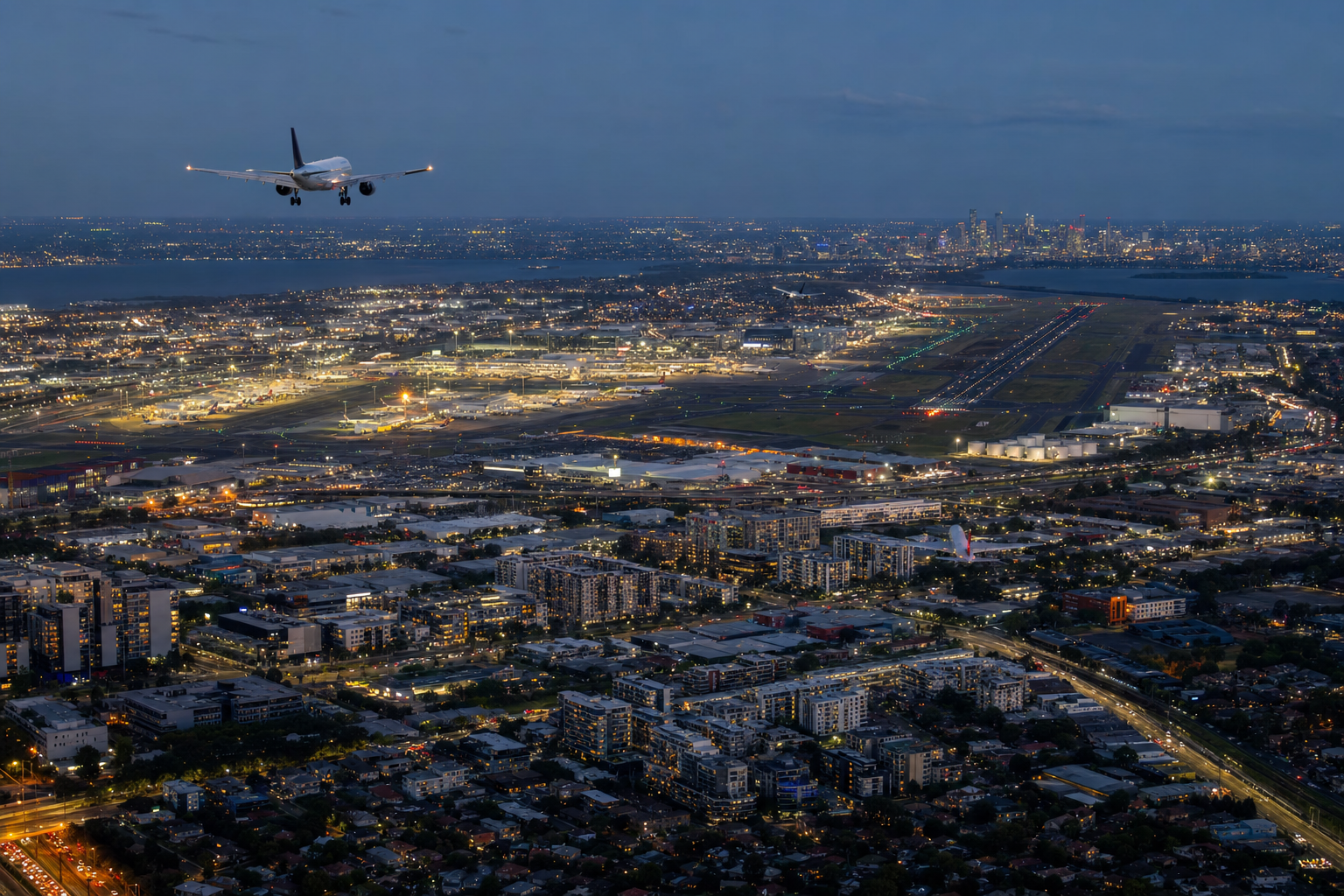
Mascot’s aircraft noise, easements and zoning can absolutely affect your home loan — from which banks will lend, to the valuation, to the maximum LVR you’ll get approved at.
If you’re buying or refinancing in Mascot this week, you want three things clear: 1) what the airport noise overlay says about your property, 2) what’s actually on the title (easements, restrictions), and 3) what the zoning and planning controls allow. Get those right and most lenders will still play ball.
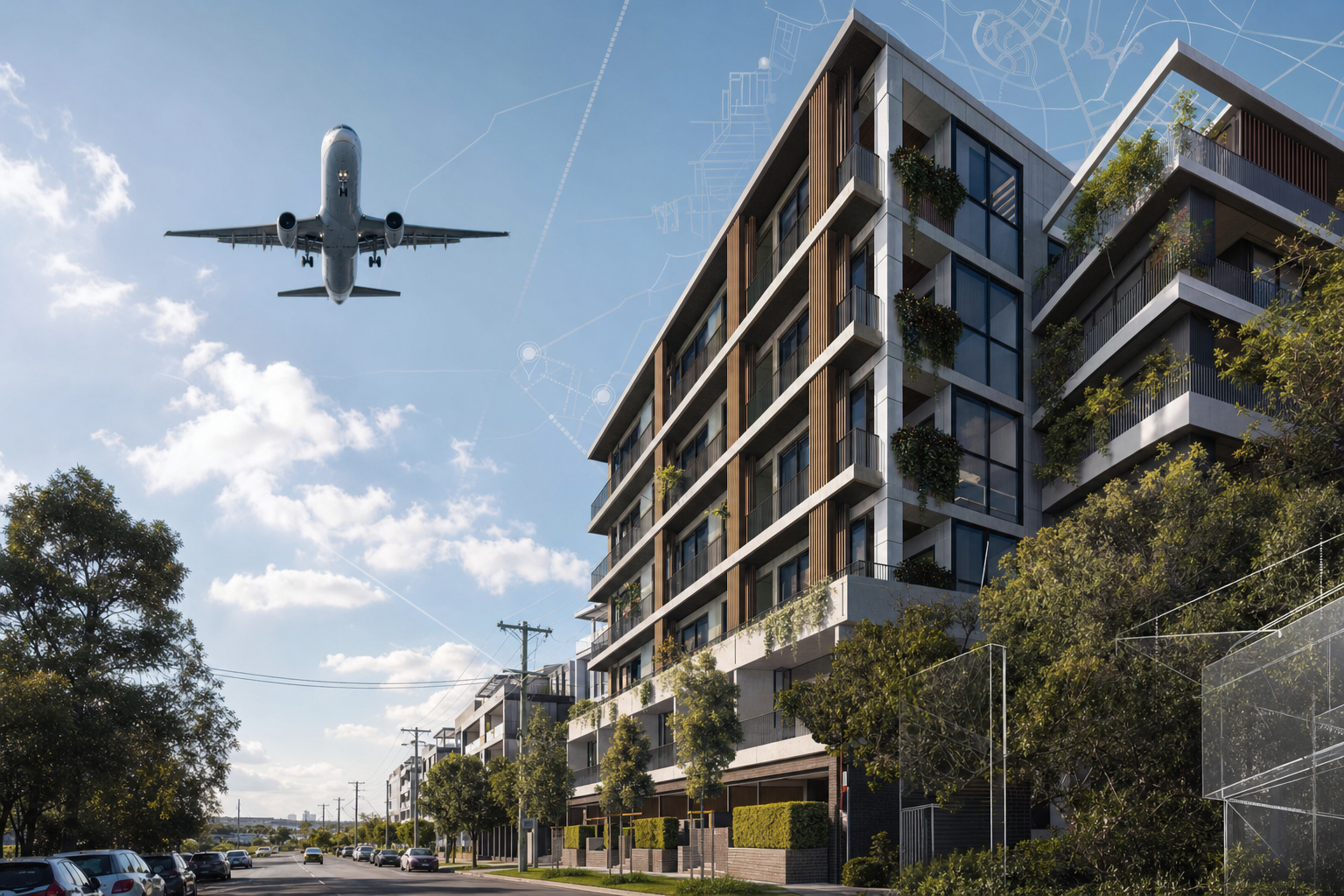
Mascot properties sit directly under Sydney Airport flight paths, which lenders factor into home loan decisions.
1. Aircraft noise in Mascot: how banks see it
Mascot sits under Sydney Airport’s flight paths, so many streets fall within Australian Noise Exposure Forecast (ANEF) contours.
Lenders don’t use your ears; they use the maps.
How aircraft noise can hit your loan
Typical lender reactions to higher‑noise locations:
- Some lenders: outright declines for properties above certain ANEF levels.
- Lower maximum LVRs (e.g. 70–80% instead of 90–95%).
- Conservative valuations, especially for high‑rise apartments near major flight paths.
On a $900,000 Mascot unit, the difference between 80% and 90% LVR is:
- 80% LVR loan: $720,000 (deposit + costs around $210k–$220k).
- 90% LVR loan: $810,000 (deposit + costs maybe $110k–$130k, plus LMI).
If your chosen bank caps you at 80% because of aircraft noise, you either need more cash or a different lender.
What to check this week
- Section 10.7 (planning certificate) – confirms airport noise and any specific restrictions.
- Contract of sale – look for any airport noise disclosure clauses.
- Council and Sydney Airport noise maps – to cross‑check whether your building is in a higher contour.
If the property is also in a high‑density tower or mixed‑use building, read this together with /insights/mascot-property-types-local-lending-rules, because those risks stack.
2. Easements: why the tiny diagram on title matters
Every Mascot buyer should know exactly what’s on the title.
An easement is a legal right for someone else to use part of your land (or airspace) — often for services, access or drainage. Near the airport and major roads, these can include utility corridors or height/flight‑related restrictions.
Easements that worry lenders
Most banks are fine with standard services easements (sewer, drainage, electricity) as long as they’re typical for the area.
They start to get nervous when:
- An easement cuts through the building footprint or key access point.
- There are broad or unusual rights (e.g. wide access easements in small townhouse complexes).
- There’s an unresolved dispute or non‑compliance noted in the contract.
In Mascot, you also see:
- Height or building restriction easements linked to flight paths.
- Shared access easements for tight townhouse rows and mixed‑use laneways.
These can affect how valuers view future resale and redevelopment potential, which then flows into your valuation and LVR.
Quick easement checklist
This week, ask your solicitor or conveyancer to:
- Explain each easement on the title in plain English.
- Confirm there are no outstanding notices or non‑compliance.
- Flag anything that could reduce future buyer appeal.
Then, give that information to your broker before choosing a lender. Some lenders are much more comfortable with complex titles than others.
3. Zoning and overlays: not just a planning issue
Bayside Council’s planning framework around Mascot includes residential, mixed‑use, commercial and industrial zones, plus overlays linked to Sydney Airport and Port Botany.
Lenders lean heavily on zoning for two reasons:
- Resale liquidity – how big is the future buyer pool?
- Future use – can the property be converted, extended or upgraded easily?
Common Mascot zoning situations
- Standard residential (R3/R4 etc.) – generally lender‑friendly, subject to aircraft noise.
- Mixed‑use or shop‑top housing – often still fine, but some banks see these as commercial‑leaning and may cap LVRs or require higher serviceability.
- Industrial or bulky‑goods nearby – can spook valuers if the property feels more ‘commercial corridor’ than ‘residential street’.
This is why some Mascot shops‑with‑units or live/work set‑ups need more nuanced structuring, especially for self‑employed borrowers or small business owners. If that sounds like you, pair this article with /insights/home-loans-self-employed-mascot-residents.
How zoning shows up in your loan terms
Zoning and overlays may lead to:
- Lower maximum LVRs.
- Higher shading of rental income for investor loans.
- Stricter cash‑out rules if you want equity for business or renovations.
Because APRA expects banks to apply at least a 3% serviceability buffer, a slightly lower usable income (or higher assessed rate) can be the difference between “approved at 80%” and “come back when your income is higher”.
4. Putting it together: what to do before you apply
Here’s a one‑week Mascot‑specific action list:
-
Get the full contract and planning docs
- Section 10.7 certificate, deposited plan, title search, strata plan (if applicable).
-
Map the risk items
- Aircraft noise contour level.
- Every easement and restriction.
- Zoning + any airport‑related overlays.
-
Pick your LVR target deliberately
- Aim for ≤80% LVR where possible to sidestep many policy caps and LMI scrutiny.
- If you need >80%, your broker needs to shortlist lenders who are comfortable with that specific building and noise profile.
-
Brief your broker like a credit assessor
- Send the contract pack up front, not after you’ve signed.
- If you’re self‑employed or aviation‑related, combine this with the strategies in /insights/complex-income-expat-aviation-borrowers-mascot.
-
Run a stress test on repayments
- Ask your broker to model repayments 3% above today’s rate on your target loan size, per APRA buffers.
- Decide whether this still fits your budget once you also factor airport‑area strata fees and higher travel/parking costs.
A Mascot‑savvy broker and solicitor working together can usually turn “too hard basket” properties into clean, bankable deals — or steer you away from the ones that will trap your equity for years.
FAQs
Does aircraft noise alone stop me getting a Mascot home loan?
Not usually. Aircraft noise is one of several risk flags, along with property type, building quality and zoning. Some banks avoid higher ANEF areas, while others are comfortable at lower LVRs. The key is matching your lender choice and deposit size to the exact street and building, using the planning and noise maps.
Are easements a dealbreaker for Mascot townhouses and houses?
Standard service easements rarely kill a deal, but unusual, broad or poorly‑documented easements can hurt valuations or push some lenders away. Lenders mainly care whether the easement affects structural parts of the property, legal access or future development potential. Get your solicitor to explain each easement clearly and share this early with your broker.
How does Mascot zoning affect investors under the new negative gearing rules?
Zoning itself doesn’t decide tax outcomes, but it shapes what you can build or convert in future, which matters more under the 2026 negative gearing and CGT changes. Investors may lean harder into well‑located, higher‑amenity Mascot properties with flexible zoning and strong rental demand, because holding poor‑quality, high‑noise stock will be less forgiving if you can’t fully offset losses.
Key takeaways
- Aircraft noise, easements and zoning in Mascot don’t automatically kill loans, but they can cap LVRs and valuations.
- The real risk is buying a property that only a narrow set of lenders will touch, trapping your equity later.
- Sending the full contract pack to a Mascot‑experienced broker before you commit is the simplest way to avoid “computer says no”.
Book a free 15‑minute Mascot strategy call at /contact to have your contract, zoning and loan options reviewed in one conversation — your tax, your loan, one expert looking at the whole picture.
General advice only.
Frequently asked questions
Talk to a CPA-certified broker
Free consultation, plain-English advice tailored to your situation.
