
Article
Strata solar and EV projects: by‑laws, metering and who pays what
Written and reviewed by James Chee, CPA · Last reviewed
A decision-grade guide to by-laws, metering and cost sharing for solar and EV projects in Australian strata schemes, with practical steps owners can act on this week.
Key Takeaway
This article explains how to structure by‑laws, metering and cost sharing for solar and EV projects in Australian strata schemes so owners can vote with confidence. It compares embedded networks versus individual metering, outlines how by‑laws should allocate rights and obligations, and shows how per‑lot modelling improves buy‑in. A key insight is that clear, project‑specific by‑laws plus transparent levy impact tables significantly reduce disputes and stalled upgrades, enabling projects to progress this quarter.
Watch the short answer
Old phone or utility defaults on your credit report
This video shows how older credit defaults affect loan approvals and what brokers can do differently.
Read the transcript
If you have a 5-year-old unpaid phone bill or utility default on your credit report, mainstream bank apps will hit 'decline' instantly. They don't look at the context, they look at the score. At Local Knowledge Finance, we do the opposite. We workshop your file directly with specialist underwriters who evaluate your financial health today, not a mistake from half a decade ago. Don't let an automated glitch hold back your property goals. DM me, 'RESET' to fix your trajectory.
General information only, not personal advice. Your situation is assessed before any recommendation.
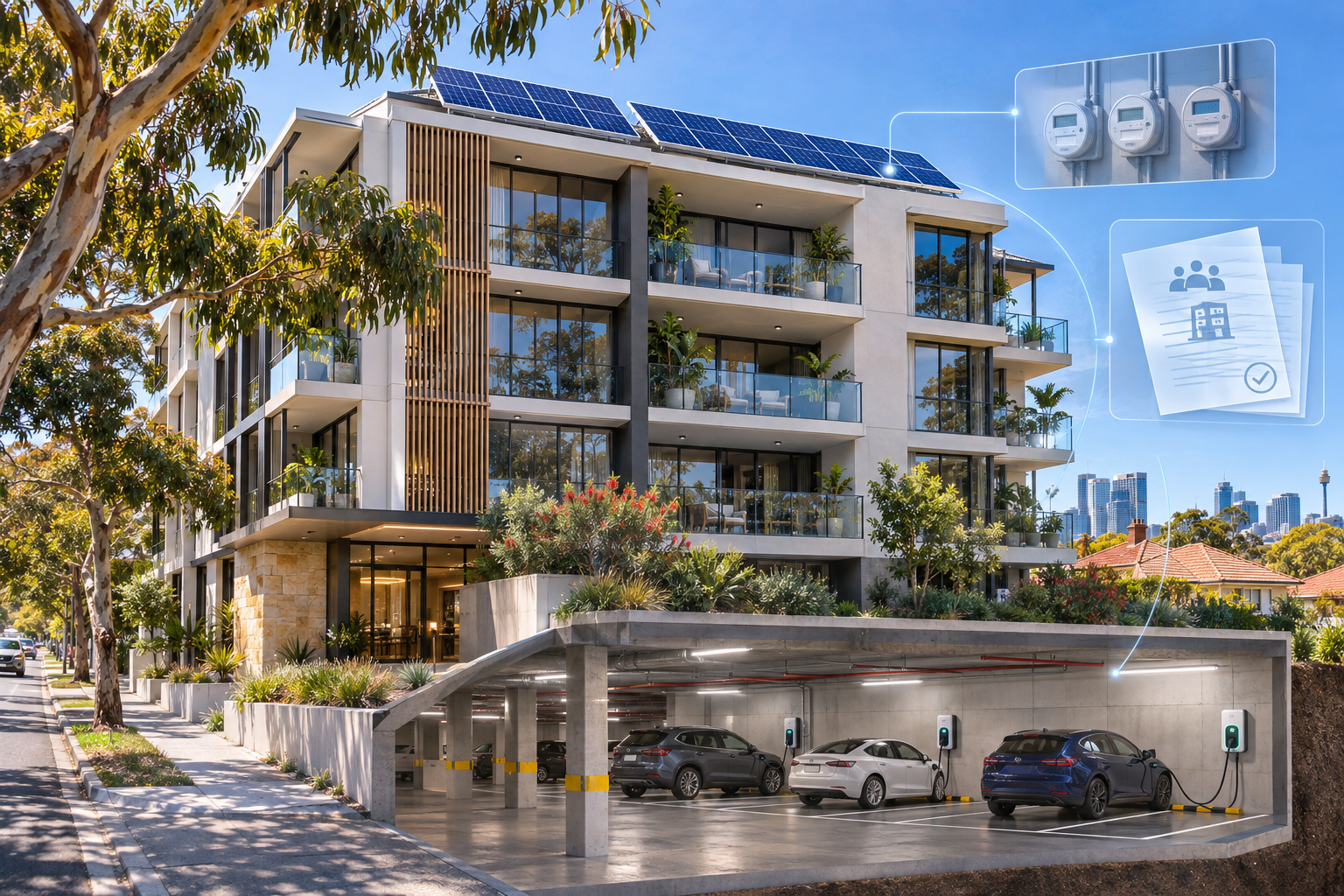
If you want solar panels or EV chargers in a strata building, you need three things sorted early: clear by‑laws, a workable metering setup, and a cost‑sharing model owners see as fair. Until those are pinned down in writing, it’s almost impossible to choose the right finance or get a special resolution over the line.
In practice, every viable strata energy project answers four questions: what can be installed, who can use it, how is usage measured, and who pays what (and when). Get written, project‑specific by‑laws to lock in those answers before you sign any contracts.
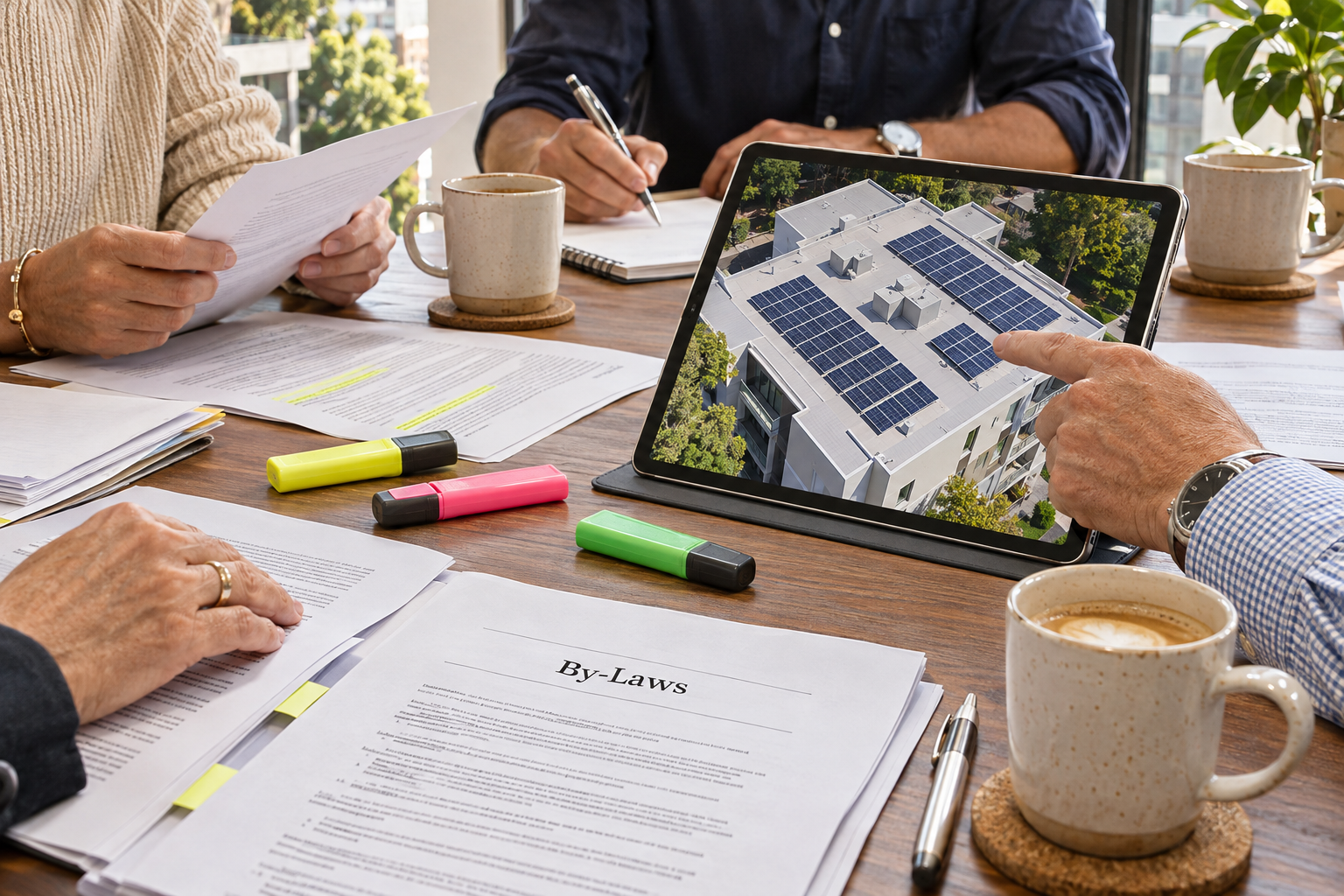
1. Start with the project structure, not the hardware
Before arguing about brands of panels or chargers, decide the basic structure of the project.
Common models used in Australian strata
-
Common-property solar, benefit by levies
OC (owners corporation / body corporate) owns and funds solar; savings reduce common power bills (lifts, lights, pool). Owners benefit indirectly via lower levies. -
Shared solar / EV infrastructure with allocation rules
OC owns infrastructure (solar, backbone cabling, load management), but usage is metered to individual lots via sub‑meters or software. Owners pay a share of capital costs plus usage. -
Embedded network with third‑party operator
An energy provider funds and owns much of the kit (sometimes via a PPA). They bill owners/tenants directly, and the OC gets a site agreement and sometimes a rebate. -
Exclusive-use upgrades for specific lots
Example: a small solar array over a townhouse lot or an EV charger in a dedicated car space, funded by that owner with OC permission.
Choosing the model affects by‑laws, metering and finance. For financing pros and cons of each structure, see How To Fund Solar, Batteries And EV Chargers In Strata Buildings.
2. Core by‑law decisions for solar and EV projects
By‑laws are where projects either become bankable and enforceable or fall apart. You want a project‑specific by‑law (or set of by‑laws), not vague generic wording.
Key issues your by‑laws should cover
At minimum, your solar/EV by‑laws should deal with:
- Ownership – who owns panels, chargers, cabling and meters (OC, a subgroup, or an external provider).
- Access and works – rights to install, maintain, upgrade, and remove equipment; safe access to roofs, car parks and switch rooms.
- Rights of use – which lots can use which chargers, how new participants can join, and any priority or booking rules.
- Cost allocation – how capital costs, finance costs and running costs are split and recovered.
- Damage and reinstatement – who is responsible if the system damages common property or lots.
- End‑of‑life / exit – what happens if the system fails, becomes obsolete, or owners vote to change supplier.
If a strata loan is involved, align your project by‑laws with the borrowing by‑law and lender conditions. Legal Safeguards For Strata Loans: By‑Laws, Security And Owner Rights is a useful parallel checklist.
Embedded networks and by‑law changes
Embedded network and PPA deals usually require:
- A long‑term site agreement (often 10–25 years).
- By‑laws granting access, specifying meter configuration, and approving on‑charging arrangements.
- A clear termination pathway and buy‑out rules.
Scrutinise:
- How prices are set and escalated.
- Dispute resolution process.
- What happens if an owner wants to opt out or sell.
You’re effectively outsourcing part of the building’s energy infrastructure, so treat it as a major contract, not just a cheaper power bill.
3. Metering choices: simple today vs flexibility tomorrow
Your metering setup determines how fairly energy and EV charger use can be billed and how easily the scheme can change provider later.
Common metering arrangements in strata upgrades
| Metering option | Typical use case | Pros | Cons / risks |
|---|---|---|---|
| Bulk supply + OC common meter only | Solar for lifts/foyers only | Simple, low admin | No direct benefit per lot, limited flexibility |
| Bulk supply + individual sub‑meters | Shared solar/EV for participating lots | Fairer allocation, scalable | Higher upfront cost, needs clear by‑laws |
| Full embedded network | Whole‑building retail & solar / batteries | Central control, potential tariff gains | Complex, lock‑in risk, regulatory obligations |
| Stand‑alone meters per charger | Individual EV bays | Clear per‑user billing | Space limits, harder to manage shared capacity |
When comparing offers, insist on a like‑for‑like table of:
- Who owns each meter.
- Who can read it.
- Who can change retailer.
- What it costs to add a new lot later.
The strategy continues below
You've seen the problem and the groundwork — now unlock the exact steps our CPA and Registered Tax Agent-led brokers use, including 3 more sections. Enter your email for instant, free full access.
Free access. No spam — unsubscribe anytime. Your details stay confidential.
Frequently asked questions
Related articles
Business finance
Choosing Interest‑Only or P&I on Strata Loans Without Killing Cashflow
Commercial & development
Commercial strata finance rules: how they differ from residential
Property investors
Refinancing An Investment Property When Your Strata Has A Loan
Property investors
Smart tax decisions on strata loans and levies for owners and investors
Talk to a broker who is a CPA and Registered Tax Agent
Free consultation, plain-English advice tailored to your situation.