
Article
Financing Medical, Dental and Allied Health Equipment Without Derailing Cashflow
A decision‑grade guide to funding medical, dental and allied health equipment in Australia. Understand loan types, tax angles, lender rules and how to protect your home while growing your practice.
Key Takeaway
Australian medical, dental and allied health practices typically finance equipment using chattel mortgages or leases over 3–7 years, with the equipment itself as security and potential 100% funding for standard assets. Lenders assess serviceability on business cashflow, not just turnover, and usually want the total asset age within 5–10 years by term end. The most effective strategy is to match loan term to asset life, ring‑fence business debt from the home, and choose the structure that best fits your tax position and cashflow priorities.
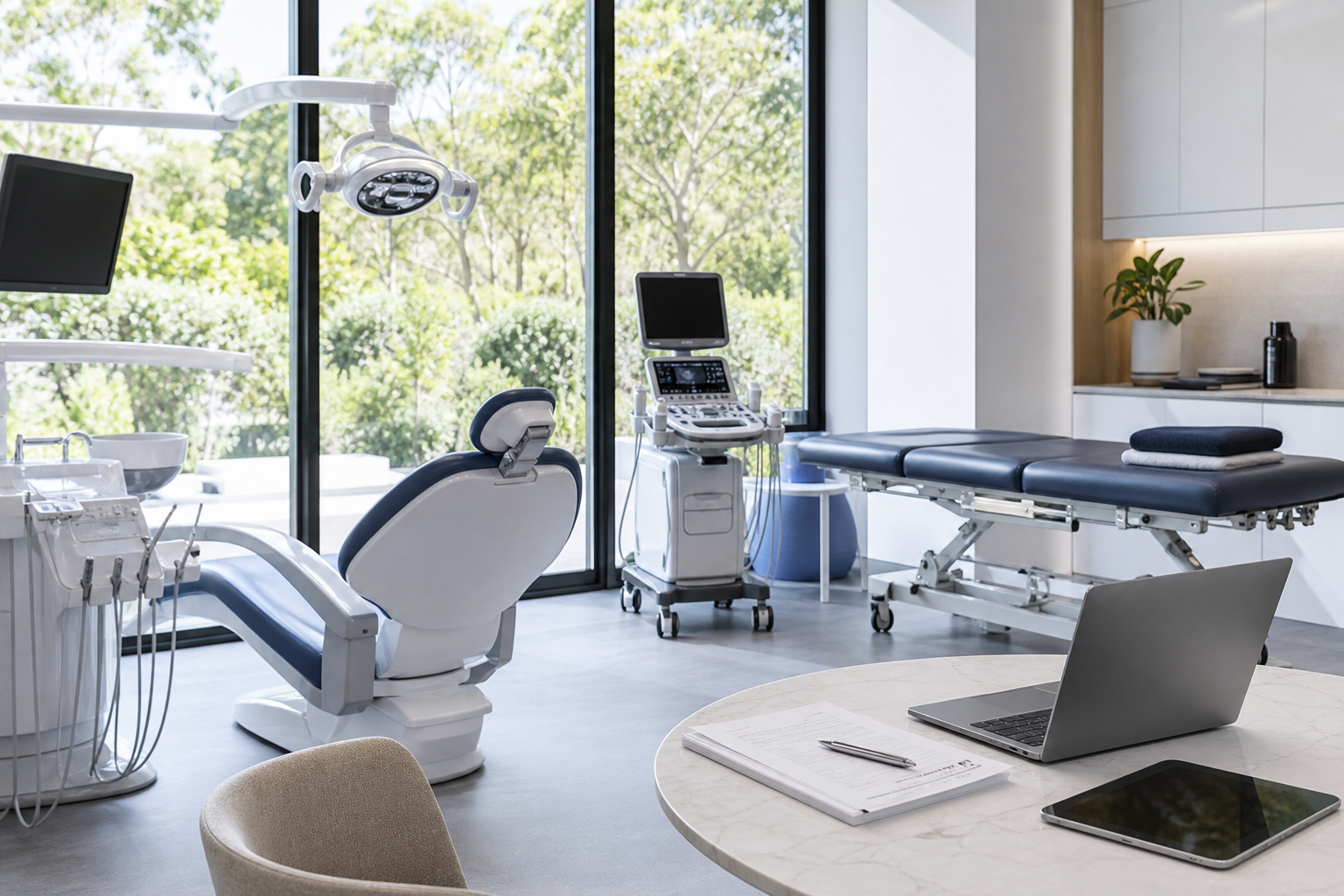
If you run a medical, dental or allied health practice, equipment is your engine room. The core question is how to fund expensive chairs, imaging, lasers or rehab gear without wrecking cashflow or putting your home on the line. In Australia, the main options are dedicated equipment finance (like chattel mortgages and leases), unsecured loans and – with care – using existing equity.
In this guide, we’ll walk through how equipment finance works specifically for health professionals, what lenders look for, tax angles, and how to choose the right structure this week. You’ll see worked numbers and a practical one‑week action plan, so you can move from wish‑list to order form with confidence.
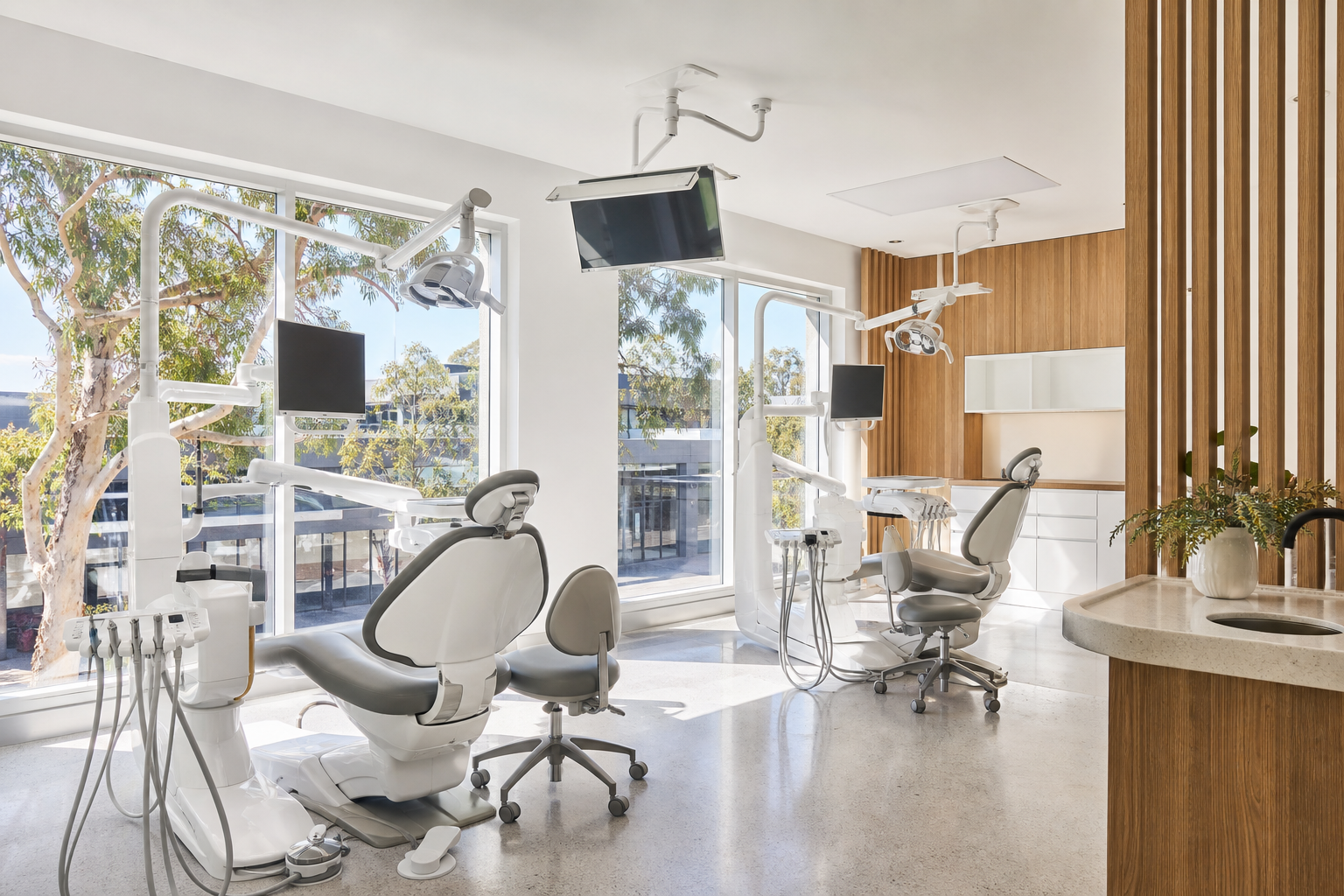
Financing dental chairs and imaging allows practices to upgrade without draining cash reserves.
1. The big picture: how health equipment finance actually works
Healthcare equipment finance lets you spread the cost of assets over their useful life, usually 3–7 years, with the equipment itself as security. For standard, resaleable assets, mainstream lenders will often fund up to 100% of the purchase price for established, profitable practices (Fact 15).
1.1 What counts as “equipment” in this space?
Common examples include:
- Dental: chairs, OPG/CBCT units, sterilisation, compressors, milling machines
- Medical: ultrasound, ECG, spirometry, exam lights, surgical instruments, practice management IT
- Allied health: physio tables, pilates reformers, rehab equipment, diagnostic tools, hearing booths
- Imaging / specialist: X‑ray, MRI/CT (often via specialist lenders), lasers, endoscopy stacks
Consumables and very small items (e.g. hand instruments) are usually funded from cashflow or short‑term credit, not long‑term asset finance.
1.2 Why not just use your home loan?
Rolling a $150,000 fit‑out or chair package into your 25–30 year home loan can feel cheap at first, but it often backfires:
- You’re paying interest for decades on an asset that lasts 5–10 years
- It concentrates risk on your principal residence (Facts 10 and 17)
- Untangling home and business debt later is messy, particularly if you want to refinance or sell a property (see)
Stand‑alone equipment finance over 3–7 years usually better matches asset life and preserves flexibility, even when the nominal rate is higher (Fact 2).
1.3 How lenders think about medical vs other industries
The good news: lenders generally like healthcare. It’s seen as:
- More resilient to economic cycles
- Professionally regulated
- Often supported by Medicare/PBS and private health systems
The catch: high individual asset values and sometimes very specialised kit. Highly customised, single‑purpose equipment (for example, niche surgical robotics or bespoke imaging hardware) is harder to finance and may need larger deposits or extra security (Fact 14).
2. Core finance options for medical, dental and allied health equipment
Most health practices land on one of four structures.
2.1 Chattel mortgage (equipment loan)
This is the workhorse for many practices.
- You own the equipment from day one
- The lender takes a charge over the asset
- Terms typically 3–7 years (Fact 7), depending on effective life
- Fixed or variable rate
- Balloon (residual) allowed, but must be realistic versus end‑of‑term value (Fact 8)
Tax angle:
- Interest and depreciation (or full deduction if instant asset write‑off applies) are generally deductible to the business
- GST on purchase may be claimable upfront via BAS (if registered), while repayments are mostly principal + interest
2.2 Finance lease
The lender owns the equipment; you rent it for a fixed term.
- You pay lease rentals (fully deductible operating expense if used wholly for business)
- Residual often set at ATO guideline levels for the asset
- Option to buy at the end for the residual amount
This can suit high‑income professionals who prefer fully deductible lease rentals and want to keep gear off their personal balance sheet, but you trade off ownership flexibility during the term.
2.3 Operating lease or rental
Here, the focus is use, not ownership:
- Shorter terms than the gear’s full life
- Often includes maintenance and upgrades
- You can swap or return at the end, subject to conditions
This works for rapidly evolving tech – think high‑end dental CAD/CAM, lasers or imaging where obsolescence is a real risk.
2.4 Unsecured business loan / overdraft
For smaller spends (say under $50,000–$100,000) or very fast needs, unsecured loans or overdrafts can plug gaps:
- Usually shorter terms (1–5 years)
- Higher rates than secured equipment finance
- Useful for software, minor upgrades, or to avoid disrupting existing facilities
Dedicated business facilities are generally preferable to dipping into personal credit cards or home loan redraws for business expenses, as they protect the family home and clarify tax deductibility (Fact 10).
3. Loan terms, asset life and lender rules for health gear
Lenders want the loan to line up with the useful life of the asset and its resale value.
3.1 Matching term to asset
General rule of thumb in equipment finance: total asset age at the end of the term must be within a sensible window – often 10–15 years for vehicles and standard machinery and 5–7 years for technology assets (Fact 1).
Applied to health equipment, that usually means:
- Dental chairs: 5–7 years
- Sterilisation/compressors: 5–7 years
- Ultrasound / standard imaging: 5–7 years
- Practice IT: 3–5 years
- Rehab gear / pilates reformers: 5 years
3.2 New vs used equipment
Used equipment is fundable, but with tighter settings:
- Lower maximum LVRs
- Shorter terms to reflect remaining life
- Higher pricing due to weaker resale value and reliability risk (Fact 4)
For example, a near‑new 2‑year‑old ultrasound may still get a 5‑year term, but a 7‑year‑old unit might be limited to 2–3 years and a lower LVR.
3.3 Standard vs specialised assets
Standard kit (well‑known brands, broad user base, strong resale) usually attracts:
- Higher LVRs (up to 100% for established practices – Fact 15)
- Simpler approvals
Highly specialised or custom equipment:
- May require a deposit (10–30%)
- Might need additional security (e.g. a general security agreement over the business)
- Can push you towards specialised funders
4. How lenders assess your application: what really matters
Even for doctors and dentists, funding isn’t automatic. Lenders look at a mix of business and personal factors.
4.1 Serviceability: cashflow, not revenue
Lenders assess equipment finance serviceability based on business cashflow after expenses and owners’ drawings, not just turnover (Fact 6).
They’ll typically look at:
- Practice turnover and trends (last 12–24 months)
- Net profit (before and after owner’s remuneration)
- Existing loan and lease commitments
- How the new repayment fits in
For tradies, keeping total equipment repayments under 15–20% of average monthly net trading surplus is a practical buffer (Fact 11). For health practices, a similar principle applies: if your net surplus is $20,000 a month, staying under ~$3,000–$4,000 in new equipment repayments is usually sensible.
4.2 Documentation: full‑doc vs low‑doc / alt‑doc
Full‑doc applications will usually require:
- 1–2 years financial statements for the practice
- Tax returns and notices of assessment
- BAS and bank statements
Low‑doc or alt‑doc equipment finance can rely on:
- BAS summaries
- Business bank statements (6–12 months)
- Accountant declarations
But low‑doc/alt‑doc typically comes with higher pricing or lower maximum amounts (Fact 5). This can be useful for fast‑growing allied health practices not yet showing full profits on tax returns.
4.3 Ownership and structure
How the practice is structured matters from a lending and tax perspective:
- Sole trader / partnership
- Company
- Discretionary or unit trust
For practice owners, smart structuring of salary, drawings and dividends can significantly change borrowing capacity (see). Getting this right 6–24 months before large finance moves is ideal.
5. Balloons, deposits and total interest cost – with worked examples
Balloons and deposits are powerful levers, but they can be misunderstood.
5.1 What is a balloon (residual)?
A balloon is a lump sum owing at the end of the term. It lowers monthly repayments but generally increases total interest cost (Fact 8) and must align with realistic asset value at term end.
5.2 Worked example: $150,000 dental chair package
Assumptions (illustrative only, not a quote):
- Amount financed: $150,000
- Term: 5 years (60 months)
- Rate: 8.0% p.a. fixed
Scenario A – No balloon
- Monthly repayment ≈ $3,042
- Total paid over term ≈ $182,520
- Total interest ≈ $32,520
Scenario B – 30% balloon ($45,000)
- Amount amortised: $105,000
- Monthly repayment ≈ $2,127
- Balloon at end: $45,000
- Total paid (repayments + balloon) ≈ $172,620
- Total interest ≈ $22,620
Counter‑intuitively, in this simplified example, the balloon reduces total interest because less principal is amortised over time. In practice, balloon deals sometimes attract slightly higher rates, and the real question becomes:
- Will the equipment still be worth at least the balloon in 5 years?
- How will you fund the balloon – cash, refinance, or trade‑in?
5.3 Comparison table: deposit vs balloon
| Strategy | Upfront cash | Monthly repayment (approx.) | End‑of‑term obligation | Key risks |
|---|---|---|---|---|
| No deposit, no balloon | $0 | Highest | $0 | Tighter cashflow now |
| 10% deposit, no balloon | $15,000 | Lower | $0 | Uses working capital upfront |
| No deposit, 30% balloon | $0 | Lower | High balloon | Need plan to clear balloon; resale risk |
| 10% deposit, 30% balloon | $15,000 | Lowest | Medium balloon | Upfront cash + future balloon to manage |
For busy practice owners, a small deposit and moderate balloon often hits a sweet spot between affordability and risk.
6. Tax and GST basics for health equipment finance
You should always confirm details with your accountant or tax adviser, but at a high level:
6.1 Chattel mortgage
- You may claim GST on the purchase price in the next BAS (if registered)
- Equipment is capitalised and depreciated over its effective life, unless small‑business instant asset write‑off applies
- Interest component of repayments is generally deductible
6.2 Finance lease
- GST is usually charged on each lease payment
- Lease rentals are generally deductible as an operating expense
- The financier claims depreciation; you may have the option to buy at residual
6.3 Operating lease / rental
- Similar to finance leases but often shorter and more flexible
- Rentals usually fully deductible
The right structure isn’t just about tax – it needs to line up with cashflow and asset plans. This is where having someone who understands both tax and lending in one conversation becomes valuable.
7. Protecting your home and personal borrowing power
Health professionals often have substantial home loans and investment goals alongside the practice. The way you finance equipment can either support or quietly undermine those goals.
7.1 Ring‑fencing business risk
Ring‑fencing business overdrafts, equipment finance and vehicle loans within business entities, instead of securing them against the home, can materially reduce concentration of risk on the principal residence (Fact 17).
That means:
- Prefer stand‑alone equipment facilities over topping up the home loan
- Avoid automatic cross‑collateralisation across home and business assets unless there’s a very clear reason (Fact 18)
- Keep security pools separate where possible (see)
7.2 Impact on future home and investment borrowing
When you later go to buy a home or an investment property, lenders will:
- Include business loan repayments in personal serviceability (even if in a company)
- Look closely at how consistent your drawings/salary are (see)
Using the right equipment finance structure can help by:
- Keeping terms realistic (so repayments finish before major personal goals like a new home upgrade)
- Ensuring business cashflow remains strong and predictable
This is where coordinating home, business and equipment lending with a single, holistic view can be powerful – provided structures avoid unnecessary cross‑securitisation (discussion here).
8. Dedicated equipment finance vs using home equity or SMSF
Sometimes you’ll be offered the option to tap equity instead of a dedicated equipment facility. Each path has pros and cons.
8.1 Equipment loan vs home loan top‑up
| Option | Pros | Cons | Best for |
|---|---|---|---|
| Dedicated equipment finance | Matches asset life; ring‑fences risk; clearer tax treatment | Slightly higher rate; extra facility to manage | Most practices upgrading or expanding |
| Home loan top‑up (equity release) | Lower home loan rate; one facility | 25–30 year term on 5–7 year asset; risks home; messy tax | Very small spends where admin is key, with caution |
In most cases, stand‑alone equipment finance is the cleaner, more strategic approach, consistent with Fact 2 and Fact 10.
8.2 SMSF: only for premises, not clinical equipment
SMSF property loans are powerful when the fund buys business premises and leases it back on commercial terms (see).
But SMSFs generally cannot buy and finance day‑to‑day trading assets like dental chairs or ultrasound units for a practice you run personally or through a company/trust. Mixing SMSF and operating assets is complex and risky – get specialist advice before considering anything outside standard LRBA property setups.
9. Quick readiness check: is your practice finance‑ready this week?
Before you order equipment, run through this short diagnostic.
9.1 Business and personal checklist
You’re likely finance‑ready if:
- Your practice has at least 12 months of trading history (or you have strong PAYG history in the same field)
- You can clearly show how the equipment will grow revenue or improve efficiency
- Your last 12 months of bank statements show stable or improving cashflow
- Your personal tax returns are lodged and up to date
- You understand your current home and investment loan commitments
You may need a more careful plan if:
- You’ve had significant income volatility or recent practice ownership changes
- BAS or tax returns are overdue
- You’re already close to your personal borrowing limits
- You’re planning a major property purchase or renovation in the next 12–24 months (example)
9.2 Documentation you can pull together this week
Having these ready will speed things up:
- Last 6–12 months business bank statements
- Last 2 BAS statements
- Most recent financial statements (if available)
- ATO portal balance (to show tax is broadly under control)
- Equipment quote(s) with item breakdown and supplier details
10. Scenario walk‑throughs: doctors, dentists and allied health
Seeing how this plays out in real life makes the trade‑offs clearer.
10.1 Dentist upgrading two surgeries – $250,000 package
Situation:
- Established suburban practice, 7 years trading
- Wants to replace two chairs, add CBCT, upgrade sterilisation
- Total package: $250,000 (GST inclusive)
Option chosen:
- Chattel mortgage, 7‑year term, 20% balloon
- No deposit (100% financed – consistent with Fact 15 for standard assets)
Impact:
- Monthly repayment roughly in the $3,000–$3,500 range (illustrative)
- Dentist expects two extra large‑case starts per month from CBCT alone, covering most of the repayment
- Facility is secured over equipment only, home loan untouched and not cross‑collateralised
Result: predictable repayments, equipment aligns with a 7‑year life, and home/investment goals remain on track.
10.2 GP adding ultrasound – $80,000, mixed cash and finance
Situation:
- Two‑doctor clinic, strong demand for women’s health and MSK
- Wants in‑house ultrasound to improve care and billing
Option chosen:
- 20% cash deposit ($16,000)
- Chattel mortgage for remaining $64,000 over 5 years, no balloon
Impact:
- Lower monthly repayments due to deposit
- Clear ownership, facilitating potential resale or trade‑in
- Upfront GST claim on full purchase (if registered), helping offset cash deposit
10.3 Allied health practice: pilates and rehab expansion – $120,000
Situation:
- Physio practice adding clinical pilates studio and group rehab
- Mix of reformers, towers, cardio, tech
Option chosen:
- Blend of:
- Operating lease for rapidly evolving cardio/tech components
- Chattel mortgage for durable equipment (reformers, racks, etc.) over 5 years
Impact:
- Lower upfront outlay
- Ability to upgrade specific tech pieces mid‑cycle via lease
- Stronger asset ownership for long‑life reformers
This kind of blended structure is similar to strategies used by other small businesses that finance vans, tools and tech separately from long‑term assets (see).
11. One‑week action plan to get decision‑ready
If you want equipment financed and ordered within the next few weeks, this is a practical path.
Day 1–2: Clarify your plan and numbers
- Finalise your equipment shortlist and get formal quotes
- Estimate incremental revenue or cost savings from the new gear
- Decide whether you’re aiming for a chattel mortgage, lease, or hybrid
Day 3–4: Gather documents
- Pull the bank statements, BAS, tax returns and financials listed in Section 9.2
- Download ATO integrated client accounts to show tax position
- Sketch a simple cashflow showing current surplus and how the new repayment fits
Day 5–6: Strategy session and pre‑assessment
- Speak with a broker who understands both home and business lending (pros and cons of consolidating with one adviser)
- Test different term and balloon structures against your cashflow and upcoming personal plans (property, schooling, renovations)
- Confirm likely approval range and whether full‑doc or alt‑doc makes more sense
Day 7: Decision and application
- Lock in preferred structure and lender panel
- Submit full application with quotes and supporting docs
- Plan for installation timing, training and any downtime required in the practice
Most equipment finance for straightforward, standard assets can move from application to approval within days once documents are ready. Complex or highly specialised assets may take longer.
Align your equipment finance with both practice cashflow and personal property goals.
12. Common pitfalls to avoid when financing health equipment
12.1 Over‑extending on multiple assets at once
It’s tempting to bundle chairs, IT, imaging and fit‑out into one giant facility. The risk is:
- Big monthly repayments that squeeze future flexibility
- Difficulty upgrading one part (like IT) without touching the whole facility
Often it’s better to stage purchases or use separate facilities for tech vs long‑life assets.
12.2 Ignoring future property plans
If you plan to:
- Buy a practice premises in the next 1–3 years
- Buy or upgrade your home
- Invest in property or a SMSF property strategy
…then how you structure today’s equipment finance matters. The more predictable your business cashflow and the clearer your separation of home vs business security, the easier your next big move will be.
For example, mixed‑use medical suites are often treated as commercial property with lower LVRs and shorter terms (Facts 9 and 12, and further detail at /insights/rose-bay-property-types-lending-rules). Keeping your operating equipment finance clean can help you demonstrate a stable, well‑run practice when you later apply for a commercial property loan.
12.3 Letting card debt or ad‑hoc credit fill the gap
Using personal cards or buy‑now‑pay‑later for business assets creates:
- Higher interest costs
- Confusing tax records
- Poor optics in loan applications
Dedicated business finance – even for relatively small IT or furniture packages – is usually safer and cleaner, similar to the approach taken in other sectors like tradies and retailers.
Allied health practices often blend leases and loans to fund studio expansions.
13. Summary tables: matching options to priorities
13.1 Option vs priority matrix
| Priority / Situation | Best‑fit options | Why it fits |
|---|---|---|
| Maximise tax deductions this year | Chattel mortgage (with instant write‑off if eligible), finance lease | Larger upfront deduction and/or fully deductible rentals |
| Keep repayments as low as possible | Longer term + moderate balloon | Spreads cost over asset life, manageable balloon |
| Avoid risking the family home | Stand‑alone equipment finance | Secured to asset, ring‑fences business risk |
| Rapidly changing tech / imaging | Operating lease / rental | Allows upgrades and returns |
| Very small or fast needs (sub‑$50k) | Unsecured loan / overdraft | Speed and simplicity, with higher pricing |
| Planning major property moves in 1–3 years | Clean equipment facility + pre‑planning | Easier future borrowing capacity and structuring |
13.2 Indicative terms by asset type
(Indicative only – lenders differ and policies change.)
| Asset type | Typical term range | New vs used notes |
|---|---|---|
| Dental chairs | 5–7 years | Shorter if already several years old at purchase |
| CBCT / imaging | 5–7 years | May be 3–5 years if older or highly specialised |
| Ultrasound / medical imaging | 5–7 years | Tighter terms and LVRs for used equipment |
| Practice IT / servers | 3–5 years | Often leased or financed over shorter terms |
| Physio / rehab equipment | 5 years | Standard and readily financeable |
| Lasers / specialist tech | 3–5 years | More scrutiny; may need deposit or extra security |
14. Key takeaways and next steps
14.1 Key takeaways
- Dedicated equipment finance (chattel mortgages, leases, rentals) is usually a better fit for medical, dental and allied health equipment than rolling costs into a 25–30 year home loan.
- Lenders assess repayment capacity on practice cashflow after expenses and drawings, not just turnover, and prefer terms that fit the real working life of the asset.
- For standard, re‑saleable healthcare equipment, mainstream lenders often fund up to 100% of the purchase price for established, profitable practices.
- Balloons and deposits are useful levers to shape repayments, but balloons must be realistic versus end‑of‑term value and you need a clear plan to clear them.
- Protecting your home means ring‑fencing business facilities, avoiding unnecessary cross‑collateralisation and keeping tax and lending structures aligned.
- Your choice of equipment finance today can either support or hinder future goals like buying practice premises, upgrading your home or investing through super.
- A simple one‑week process – clarify the plan, gather documents, test structures, then apply – is usually enough to go from idea to decision‑ready.
14.2 What to do this week
If you’re considering new equipment, the most useful next step is a short, focused strategy session that looks at your practice, your personal property plans and your tax position together.
Book a free 15‑minute strategy call at /contact to:
- Compare chattel mortgage vs lease vs hybrid options for your specific equipment list
- Test different terms and balloon levels against your practice cashflow and personal goals
- Map out how today’s decision will affect your next home, investment or premises purchase
Your tax, your loan, one expert – a CPA, Tax Agent and Broker in one consultation, so your equipment finance works for your whole financial plan, not just the next payment.
General advice only.
Frequently asked questions
Talk to a CPA-certified broker
Free consultation, plain-English advice tailored to your situation.
